

Ask Asteria
Start with what you need finished.
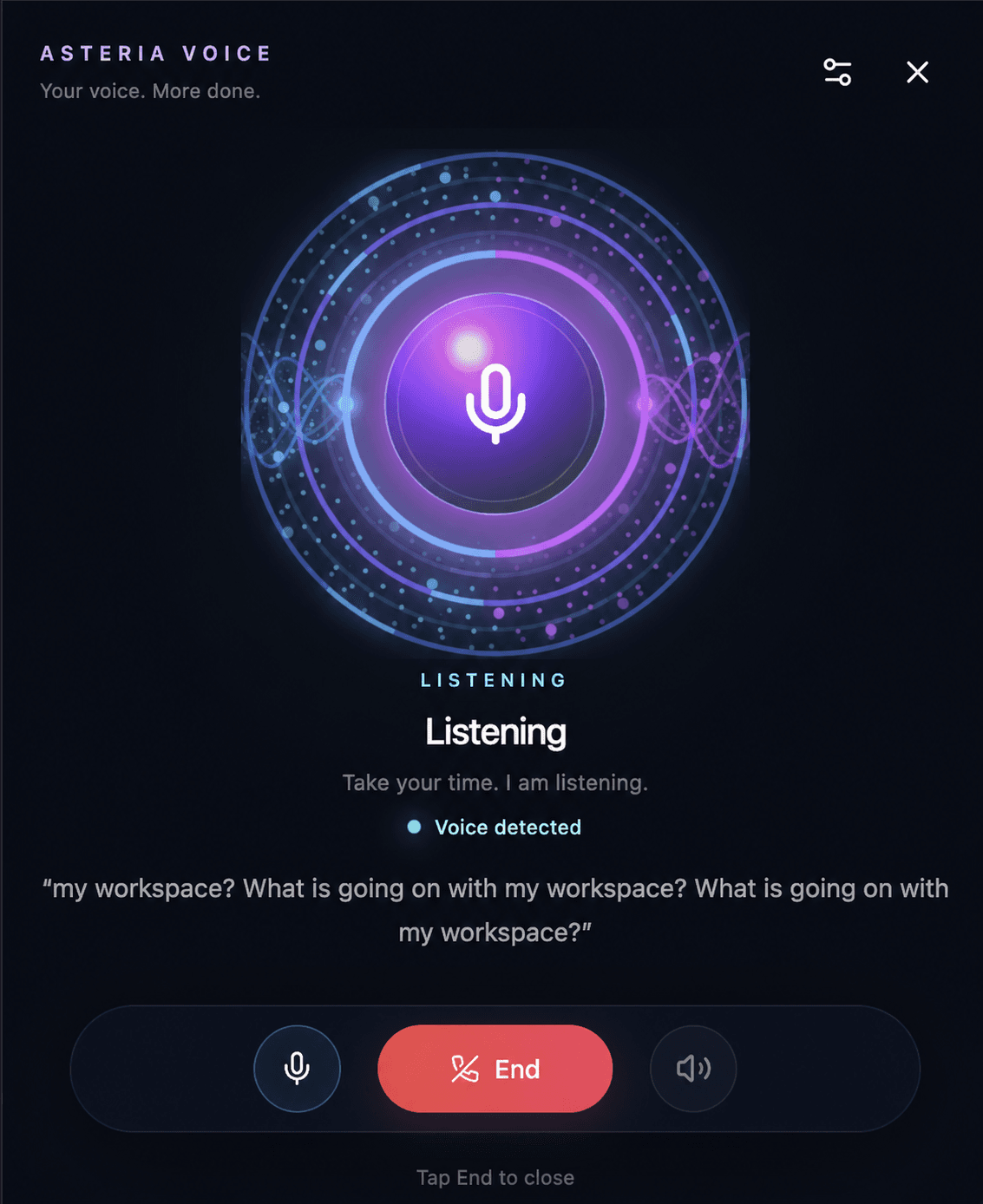
Talk or type through the goal, consider the proposed direction and let the assistant carry supported work forward.


Run
One connected operation
Most platforms still assume your team already has the strategy, copy, media, review process, and publishing discipline in place. Asteria Engine is positioned differently: as a platform that compresses more of that workload into one operating system.
Use one platform for planning, drafting, visuals, approvals, scheduling, reporting, and brand control instead of stacking disconnected tools.
Your social media team, without the team
Strategist, copywriter, designer, scheduler, and analyst stay connected so a lean team can ship social campaigns with less operational drag.
Your social media team, without the team
Virtual team
5 roles
Asteria works like five social roles inside one controlled workflow
Shapes the campaign angle and channel plan.
Turns the direction into platform-ready posts.
Feeds learnings back into the next campaign.
Brief
Linked
Assets
Linked
Approval
Linked
Before
After
Two ways to work
The working style can change without the brand, campaign history or final approval disappearing between tools.
Talk or type through the goal, consider the proposed direction and let the assistant carry supported work forward.
Set the format, channel, purpose and creative direction when the team already knows what it wants.
The same brand understanding
The same campaign history
The same final approval
01
A scheduler handles the final stage of publishing. A caption tool helps fill a text box. A true platform should help the team move from planning to published output with less fragmentation across systems and less repeated human effort.
That is the job Asteria is built to do: connect planning, AI generation, media, approvals, scheduling, analytics, and brand context into one workflow.
Asteria Engine Studio is the clearest expression of that model because it gives one workspace for prompt design, asset generation, caption refinement, and packaging before content ever reaches the publishing calendar.
02
The value of a platform is operational. It should reduce blank-page work, keep brand voice more stable, tighten review loops, and make reporting usable for the next decision rather than just for historical dashboards.
That workflow is easier to understand once Studio is included in the picture. The platform does not only manage scheduling and reporting. It also gives a dedicated place where the asset and caption package gets built before approval and publishing.
03
This route is most relevant for SMEs, agencies, charities, and professional-services teams that need more output without building a full internal social department.
Because buyers often need to understand the operating model first. Feature pages answer narrower workflow questions. The platform page explains how those parts work together.
Not necessarily. The stronger case is that it replaces enough of the fragmented planning, drafting, publishing, and review stack to make the workflow materially simpler.
If your current stack separates planning, drafting, scheduling, and reporting into different tools, compare the Asteria platform model against that operational overhead.